
Our design philosophy
Slow decisions, honest cloth, and the five-year test — the working beliefs behind everything the house makes.
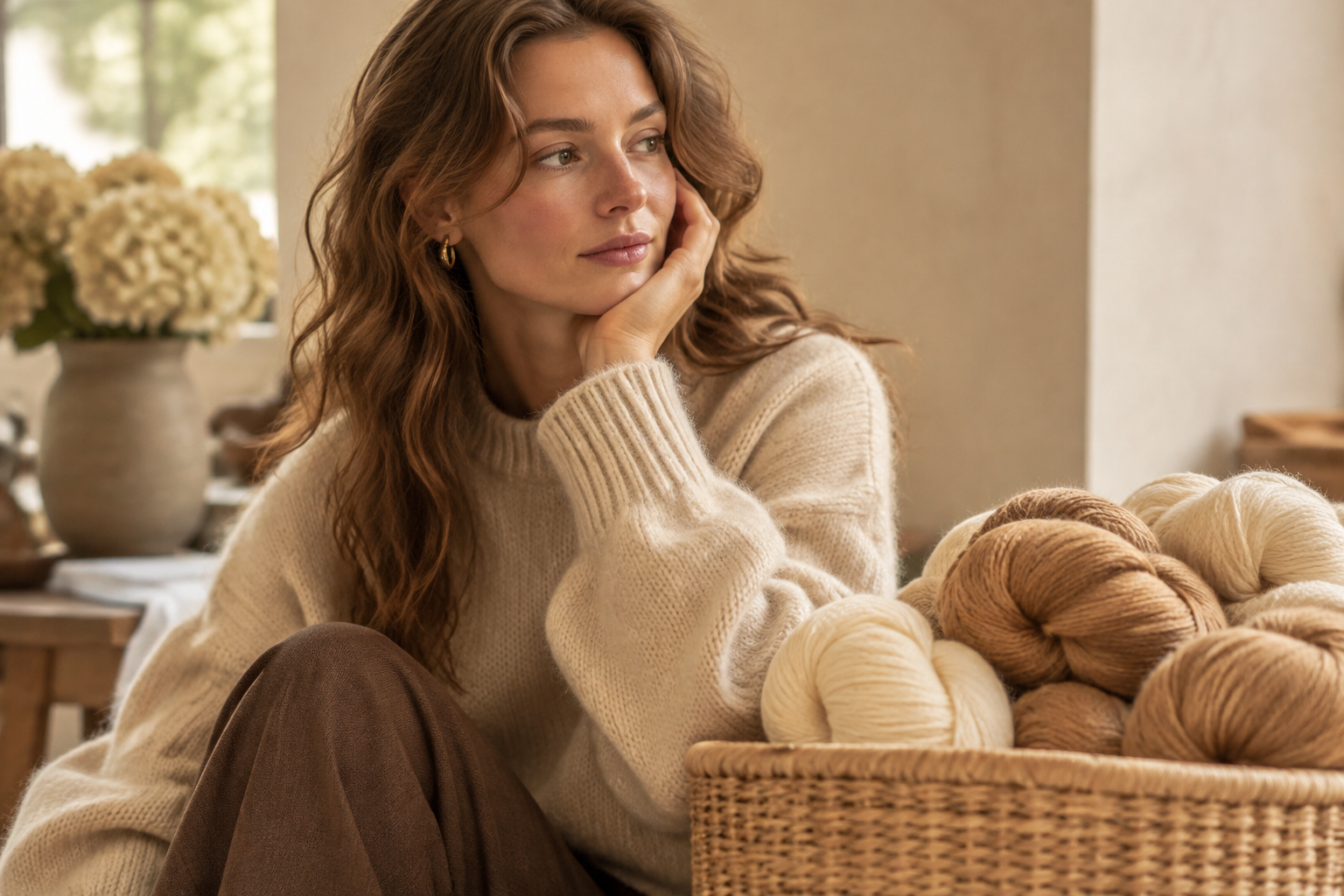
Every design decision at Jemvic passes through the same narrow door: the five-year test. Will this piece still feel right in five years — in your wardrobe, on your shoulders, at your current age and your next one? It is a demanding question because it refuses the usual comforts of the trade. Novelty cannot pass it. Discount pricing cannot pass it. The flattering cut that only works on one body cannot pass it. What passes is simpler and harder: proportion, cloth, and restraint.
This document is our philosophy written down — not as marketing, but as the working notes we actually consult. When an argument breaks out at the cutting table, and arguments do break out at cutting tables, these are the principles that end them.
Cloth comes first, always
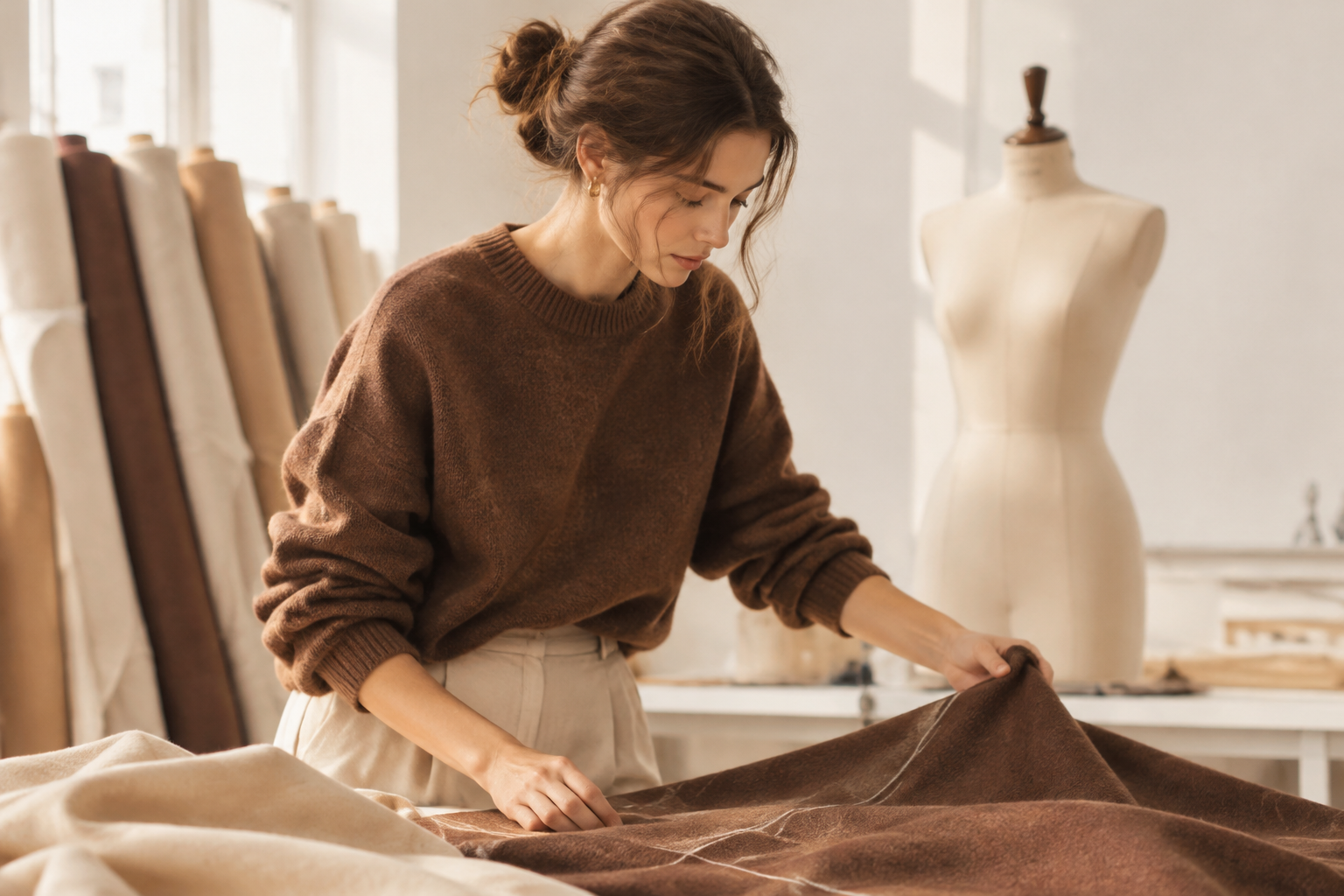
A garment is a piece of cloth that has been persuaded to hold a shape. The persuasion is our job; the cloth is the given. So we start there, every time. We buy from mills and merchants we can visit, in quantities we can honestly use, and we handle every bolt before it is bought — because a photograph of a weave has never once told the truth about how it drapes.
Buying honestly has an uncomfortable consequence: when a bolt runs out, it runs out. We will not substitute a lesser weave to keep a piece on the rail. Favourites sell out; the camel coat most seasons. We would rather explain a sold-out rail than defend a compromise. This is the first principle, and it is the one that costs us the most money, which is how you know we mean it.
When a bolt runs out, the piece rests. We would rather say no than substitute.
Design is subtraction
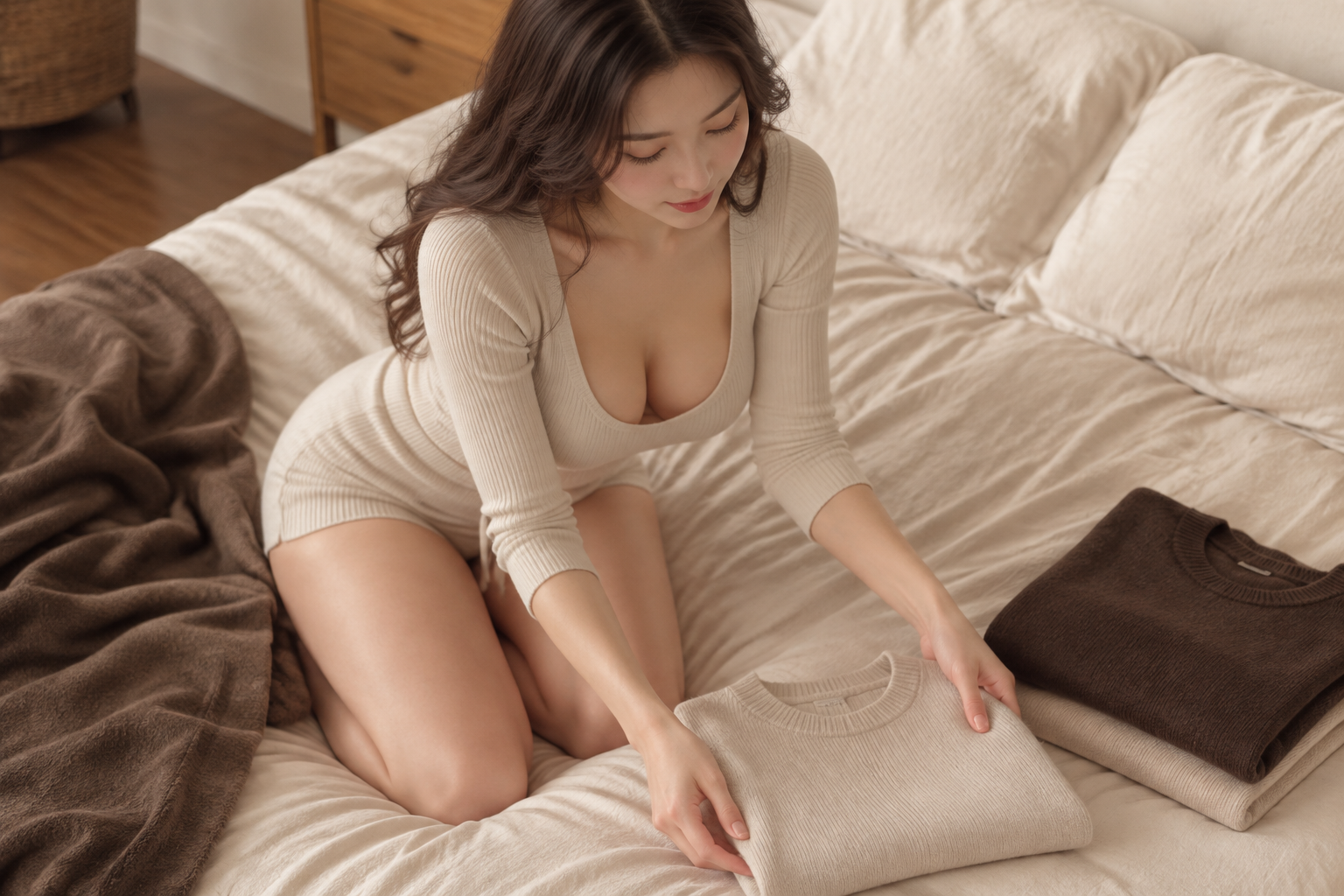
The clothes that last are the ones you cannot easily describe. Ask someone to describe their favourite coat and they will say: well-cut, the right weight, the colour I reach for. Ask them about this season’s novelty piece and the description runs a paragraph. Detail is easy; restraint is the discipline. Our patterns are edited the way good prose is edited — the lapel that sits open without a fight, the pocket placed for hands rather than for symmetry, the hem finished so it can be repaired.
We design in a narrow band on purpose: natural fibres, a warm neutral palette, mid-weight cloth, shapes cut for movement. Within that band there is more room than you would think — the whole range of a considered wardrobe fits inside it. Outside the band is where trend lives, and trend is a landlord that raises the rent every season.
Fitted on real bodies, worn for real days
Every piece is sized across a range of real bodies, not on a single fit model, and each is worn for a full day inside the studio before it is signed off. The fitting day is unglamorous and non-negotiable: the coat goes on the school run, the trouser sits through a two-hour meeting, the knit survives a bicycle. Problems that never appear in a fitting room appear in an afternoon of real life, and it is far better that they appear while the pattern can still argue back.
This is also why our sizing is honest. A size that only fits if you breathe carefully is not a size; it is a wish. We would rather a customer orders down than flatters a pattern. The rail is cut for the people who will actually wear the clothes.
Small runs are a design decision
We release in drops — a coat edit in early autumn, knitwear as the cold settles — and we make in quantities the studio can supervise. Small runs are usually described as an environmental position, and they are that, but they are primarily a quality position. Supervision is the whole difference between cloth sewn and cloth engineered. A run the studio can touch, every piece, is a run where nothing quietly goes wrong.
The two-house arrangement
We keep the story and the stock in two houses. This site — the journal, the lookbooks, the philosophy — is where the house thinks out loud. Our clothing store is where pieces are listed, sized and sold. It is an arrangement we chose deliberately: a brand that only talks is a newsletter, and a brand that only sells is a catalogue. The conversation needs both rooms.
On colour: a neutral is a decision
The palette is narrow — camel, cream, chocolate, indigo, black — and people occasionally ask whether that is a constraint or a brand. It is a conclusion. A wardrobe built on warm neutrals composes itself at seven in the morning without a mirror; every piece argues for every other piece. We add a colour when a season’s cloth genuinely offers one, never because a colour chart said it was time. Last winter a dyed bolt arrived almost apricot; it was beautiful and it was not ours, and it went back. The house cream is the closest thing we have to a signature, and even that is really the colour of undyed cloth left alone.
On price: the cost of not lying
Honest pricing is unglamorous arithmetic. Pressed wool from a mill we visit costs more than a photograph of pressed wool. A run the studio can supervise costs more than a container we never see. Repairable finishes cost more than glued ones. We price at what the making costs plus what keeps the studio open another year, and we do not run sales, because a price that only works at seventy percent off was never an honest price. When people ask why the camel coat costs what it costs, the full answer is on this page — the mill, the run, the fitting day, the five years — and the short answer is that cheap is the most expensive habit a wardrobe can have.
On growth: a house, not a ladder
There is a version of this story where the next paragraph is about scaling — new categories, new markets, a flagship. We are not writing that paragraph. The studio grows at the pace its supervision allows, because supervision is the entire method. A second cutting table is a plan; a third is a committee. We would rather be a small house with a kept promise than a large one with a remembered one. If that means the camel coat sells out most seasons, consider it the size of the house, printed honestly on the rail. This is not modesty; it is arithmetic with a spine. The house serves the wardrobe, the wardrobe serves the person, and the person — unlike the quarterly report — can tell the difference between a kept promise and a well-worded one.
On the name
People ask what Jemvic means. It is a family shorthand — the kind of private nickname that outlives its own origin — and we kept it because it sounded like the clothes we wanted to make: unfussy, a little warm, not trying to be anyone else. There was a moment, early, when an advisor suggested a name with more search volume. We kept the nickname. A house that would rename itself for an algorithm would redesign its coat for one, and the coat is the whole point. Words are also cloth in a sense: they wear, they soften, and a good one holds its shape for years. We intend to grow old with this one, and we intend it to fit the same way in a decade — which is, in the end, the only brand promise the house has ever made.
On seasons: the calendar we keep
We design in seasons but release in drops, and the distinction matters. A season is a point of view — what the cold months ask of cloth, what the light does at four o’clock. A drop is a delivery schedule. Fashion’s trouble began when the second ate the first, and calendars started serving warehouses instead of wardrobes. Ours serves the wardrobe: outerwear early autumn, knitwear as the cold settles, tailoring through the season, linen when the rooms warm up. When a drop is late, it is usually the cloth, and we say so on the product page rather than ship an apology.
What we will not do
- We will not chase a trend into the rail — the band is narrow by design.
- We will not substitute a lesser cloth to keep a piece in stock.
- We will not print a claim about our making that the making room cannot show.
- We will not style a photograph to hide how a piece behaves in daylight.
- We will not grow the run faster than the studio can supervise it.
That list, like everything above, is subject to the only review that matters: the wardrobe in five years. If we ever fail the test, these notes are where you can hold us to it. The door, as always, is open by appointment.