

Lookbook this season
The autumn — winter collection, photographed where it actually lives: long walks, studio fittings, the good light at four o’clock.
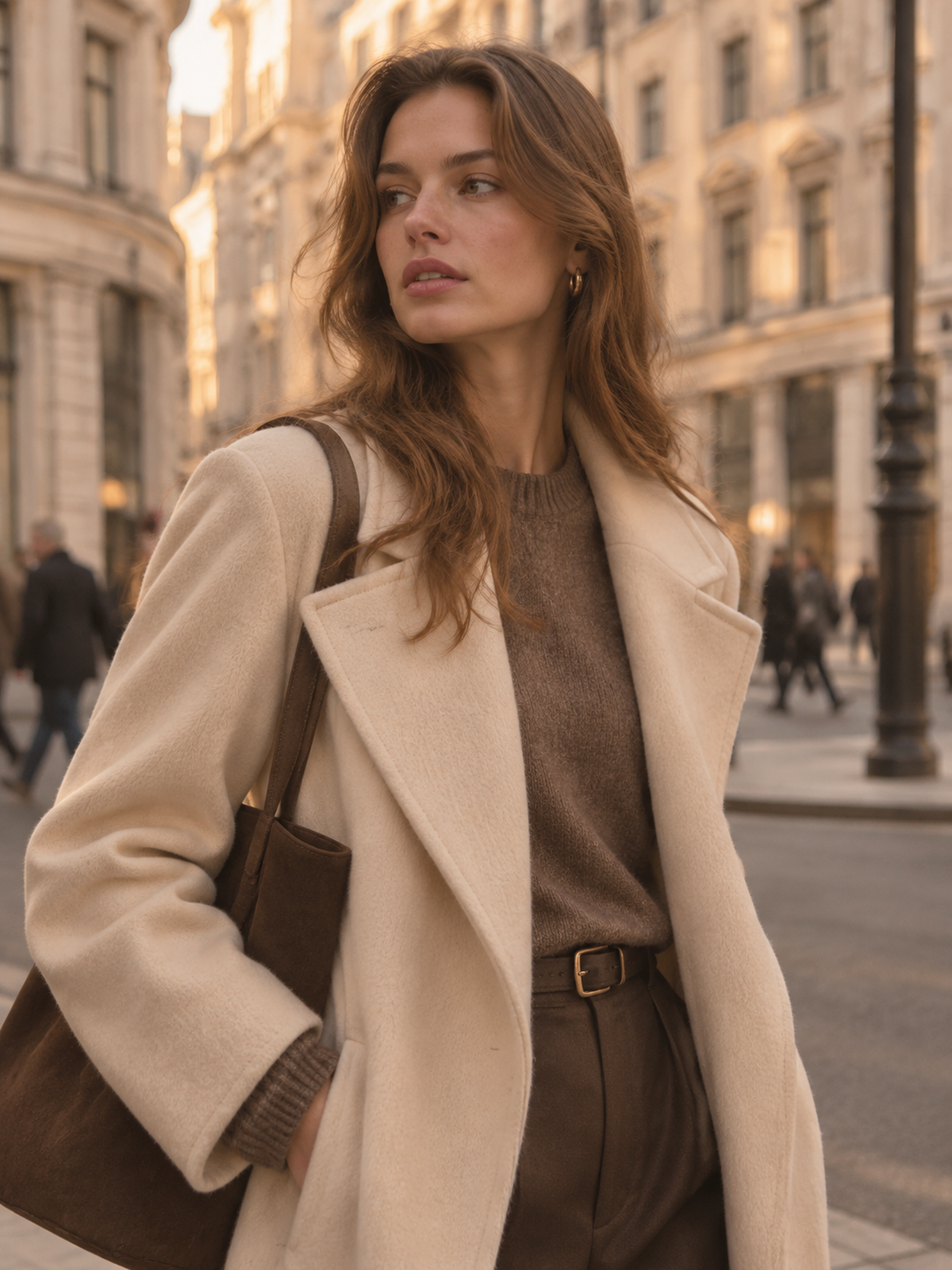
A lookbook is a promise made in photographs. Ours is made on the street, in the fourth hour of an English afternoon, with the kind of light that tells the truth about a colour. This season we shot the collection across three weeks in London — Regent Street at golden hour, the heath at dusk, a flower market before the crowds — because that is where the clothes were designed to live. What follows is the edit, in the order we would dress you, with the thinking behind each piece written down while it is still honest.
The season opens with outerwear because in London everything does. The camel double-breasted is the collection’s thesis: a coat with shoulder, cut long, pressed wool from a mill we visit in person. Photographed on Regent Street against the stone, it does what we designed it to do — it makes the street look like it was dressed to meet the coat, not the other way around.
The fourth hour of an English afternoon is the most honest light there is. It flatters nothing; it reveals everything.
The knit that carries the season
Under the coats, the oatmeal chunky crew does the quiet work. It is knitted from undyed lambswool — the colour is the flock’s, first — and it has the particular virtue of looking better slightly worn. On the heath, with wind doing its usual editorial work, the knit reads exactly as intended: warm, definite, unbothered.
We shot it three ways because knitwear deserves the honesty. Over the white shirt, collar out — the Saturday museum look. Under the camel coat, collar tucked — the commute. Alone, sleeves pushed — the Sunday that becomes Monday. The knit held all three without changing its mind, which is the whole argument for spending properly on wool. A garment that can be styled three ways is three garments; a garment that only works one way is a photograph.
Weather, worn honestly
English autumn does not do grand weather. It does four seasons before lunch and drizzle that reads as atmosphere. We made no attempt to style around this — the book was shot in what the sky offered, and the layering logic of the collection is built for exactly this indecision. The fine-gauge cream crew under the blazer comes off by eleven and goes back on at four. The scarf lives in the bag until the heath. The chocolate overcoat earns its heavier hand after the clocks change, when the city goes copper at three in the afternoon and every coat finally looks justified.
This is also why you will see the same pieces weathered differently across the book. The indigo jeans appear rain-dark in the market shots and dry-pale on the heath a week later. Denim is a diary; we let it write.
The ribbed chocolate dress is the season’s sleeper. On the rail it is the quietest piece in the room. Worn, it answers more questions than anything else we make — the wrap waist ties where it flatters, the skirt moves a half-second behind the body, and the colour behaves like a neutral without surrendering to grey. We photographed it twice: once in daylight, once after dark against the candle-warm interior it was designed for. It passed both examinations, which almost nothing does.

Tailoring, unclenched
The cream suit was photographed crossing a glass lobby precisely because tailoring should survive architecture. Cut relaxed through the body and precise at the shoulder, it is the rare suit that looks composed in a mirror and behaves on a staircase. We styled it three ways for this book — fully suited, blazer over denim, trouser under knit — because a suit you can only wear one way is a costume, not a purchase.
Beneath it, the white shirt cut long does its unsung work. It tucks with intention or hangs loose with indifference, and it irons — when you choose to — into the sharpest thing in the drawer. We photographed it half-tucked on purpose. The lookbook should show you how the clothes are actually worn, or it is not a lookbook; it is a catalogue of excuses.
The evening register
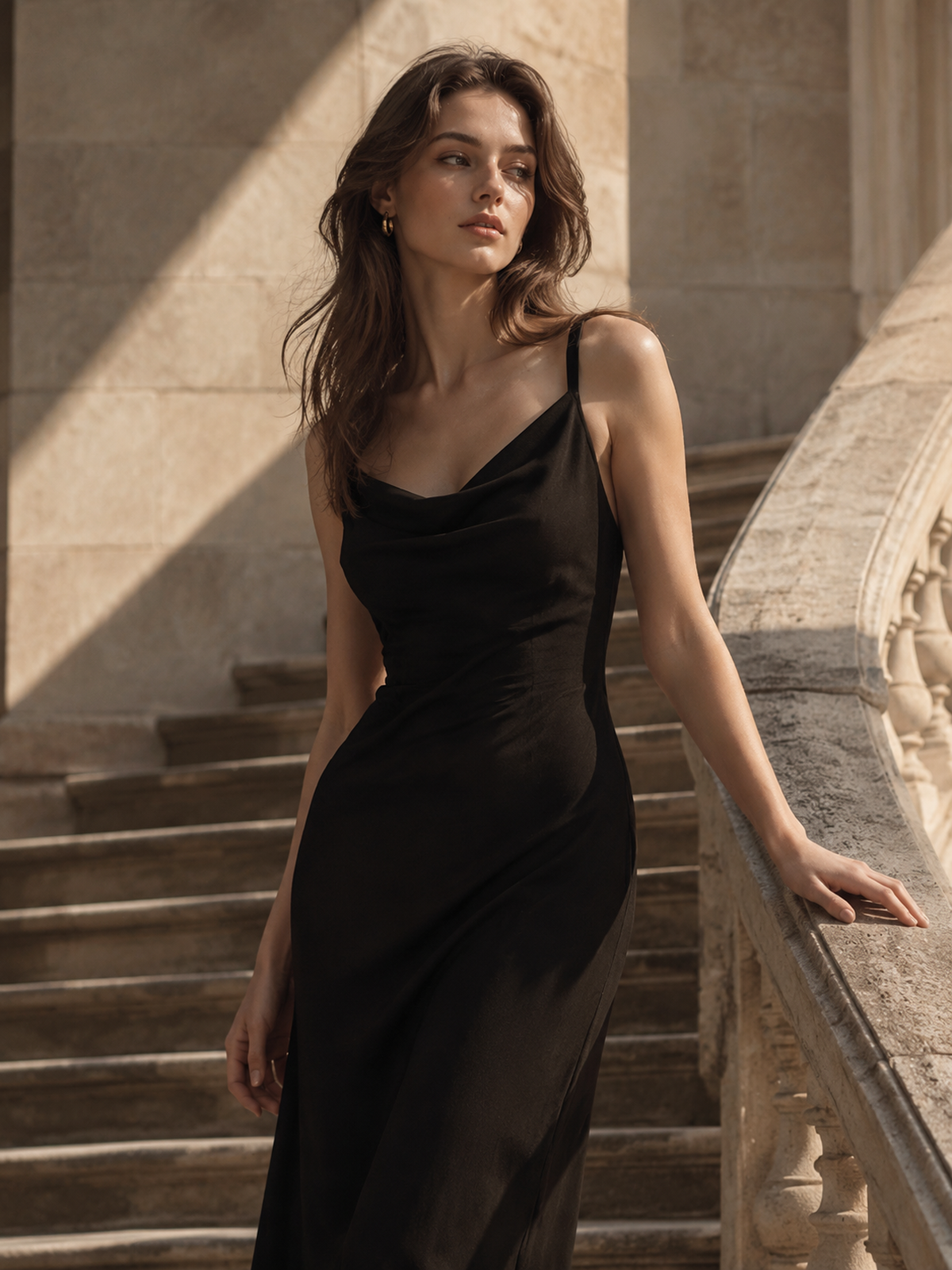
After dark, the edit changes register. The black silk dress on the stone staircase is the season’s one concession to ceremony — a dress with a bias that catches candlelight the way satin should, cut mid-calf so it can walk home. We shot it at the top of the hour, when the light goes amber, because that is when it will actually be worn.
The accessories follow the same rule: the brown leather bag, the cream scarf, the belt — photographed being adjusted, not displayed. You do not live in a still life. Neither should your clothes.
Real bodies, photographed as they arrive
A word about the people in this book. They are colleagues, friends of the house, and one very patient neighbour. They are different heights and different shapes, and we did not retouch them into agreement. The coat fits across shoulders the pattern never met because the pattern was cut for a range, not a person. This is the least glamorous promise in fashion and the one we are proudest of: what you see here will behave the same way on you, in your light, at your hour.
If you are between sizes, the honest advice sits on each product page — the studio fits run true at the shoulder and generous through the body, and the product notes say where a piece wants a size down. Nobody here will ever tell you a garment fits. The garment will tell you, and we will have written down what it usually says.
The outtakes, briefly
Three shots from this book failed for reasons worth recording. The linen set was shot in a conservatory so bright the cream disappeared — reshot against greenery, which gave the cloth something to argue with. A market frame was abandoned because the flower seller’s barrow, wonderful in person, shouted down every coat in it. And one staircase was climbed twice: the first ascent photographed the dress beautifully and the shoes terribly, and a shoe that cannot survive its own staircase does not deserve the frame. The clothes passed these examinations. Sometimes the locations do not.
Accessories, worn in
The supporting cast deserves its own paragraph, because accessories are where brand discipline shows. The brown leather bag has been carried daily since spring — to the mill, on the school run, through two trade afternoons — and it has reached that stage where the leather has opinions about weather. The cream scarf is wide enough to count as outerwear on the night bus and photographs like a costume piece without ever being one. The belt is a single keeper, brass buckle, no logo, and it will outlast several of the outfits it holds together. None of it is seasonal. All of it appears in this book because all of it was in the room.
What we left out, and why
There were eleven pieces this season and seven made the book. The linen set waited for a conservatory that never warmed; the fine-gauge knit photographed in a way that made it look like a different, worse jumper; one skirt sample fought the wind for the entire heath morning and lost. Leaving pieces out is not a judgment on them — some clothes are better in person, and we will say so when they land at the clothing store. A lookbook is an argument, not an inventory, and arguments need editing.
How to buy from this book
Everything here is listed at our clothing store, piece by piece, with honest measurements and photographs taken in the same light you will wear it in. If something has sold through — the camel coat, most seasons — it rests until the cloth returns, and we would rather say that than substitute. The lookbook pages link directly to the pieces they show; the journal pages, this one included, link to the thinking.
And if you want the whole edit on a rail with a kettle nearby, the studio takes visitors by appointment. Write to us. The autumn light is best at four.
One practical note before you go. The photographs in this book are joined by full cloth notes at the clothing store — weight, weave, care, and honest measurements taken on the flat, not estimated from a hanger. If you have ever bought a coat twice because the first one lied about its shoulders, you already understand why we measure everything twice and say so. The book is the argument; the product pages are the evidence; and the fitting room, as ever, is your own hallway, where all of this either works or does not. We have done our part in the daylight. The rest of the story happens at your door, in your light, and that is exactly where we hope to hear about it.