Outerwear
Coats with shoulder and intent — cut long, weighed honestly, and lined to survive the coat-check carousel.
An English autumn is not a season so much as a negotiation, and the coat is how you win it. The Outerwear edit is built around one idea: a coat should be the most decisive thing you put on. Ours are cut long through the body, with a shoulder that holds its line over knitwear and a weight that moves when you do — never the other way round.
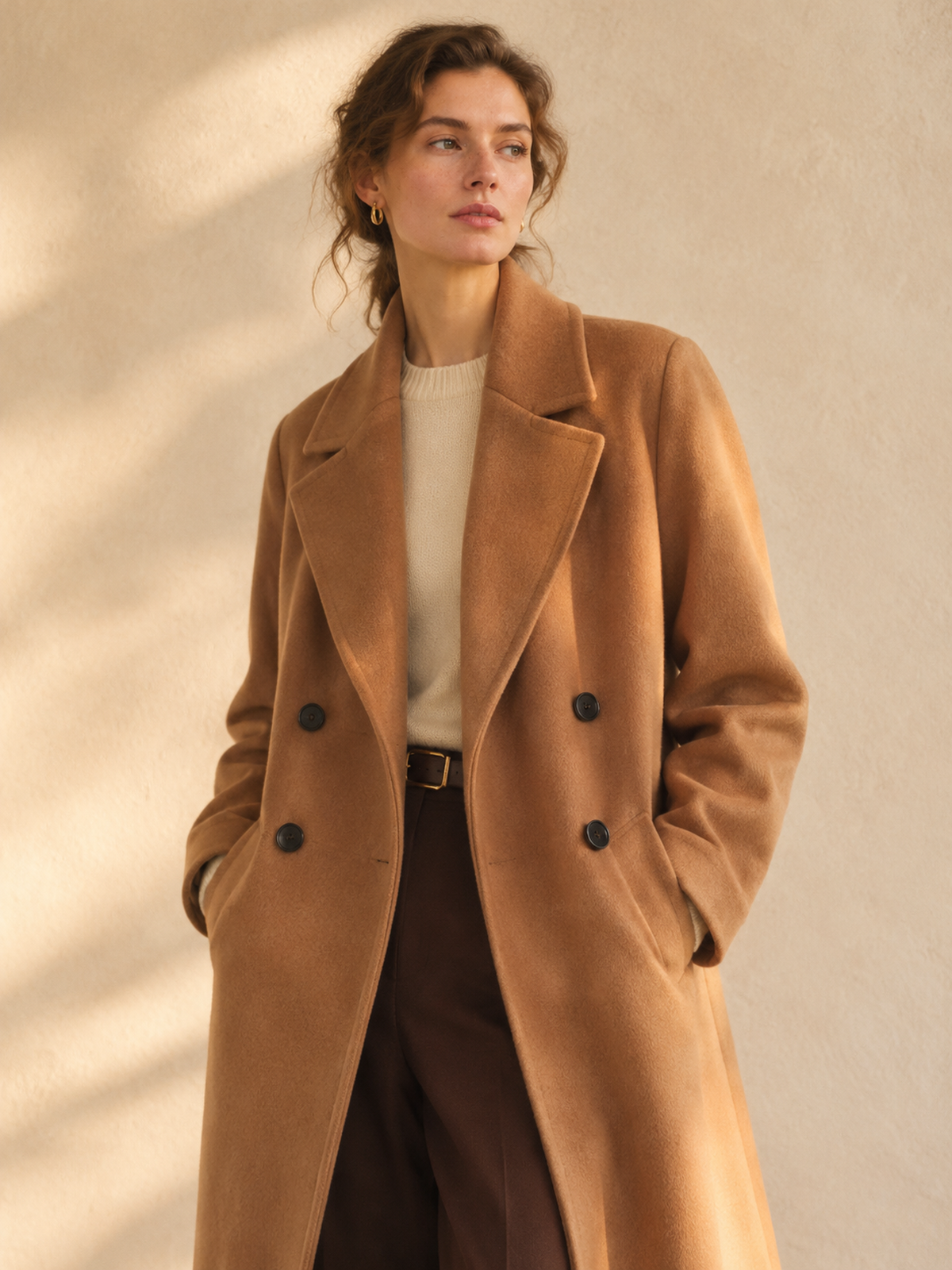
The camel double-breasted is the anchor of the edit and the piece most people meet first. Its cloth comes from a mill we have bought from since the beginning: a pressed wool that reads tailored from across the street and feels broken-in by the second wear. The lapel is cut to sit open at the collarbone. The pockets are placed where hands actually go. None of this is decoration; all of it is the point.
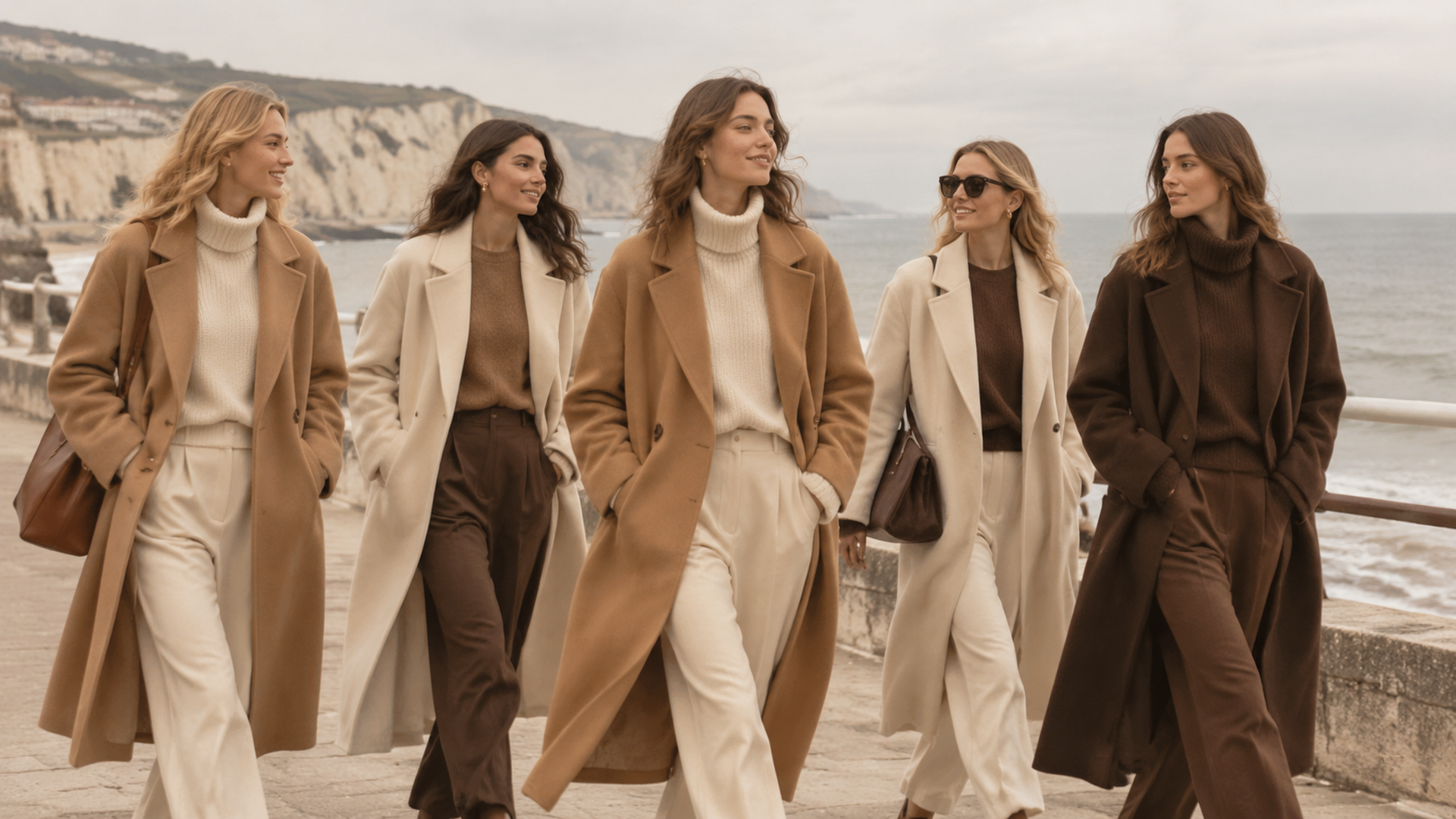
Worn, the edit behaves like a small cast. The camel over everything in cold weather; the cream under wool coats when a meeting needs sharpening; the chocolate from November, when the city goes copper at four and every heavier hand finally looks justified. They are photographed here with the knitwear edit for exactly this reason — a coat decides the day, but a coat over the right crew decides the week.
Alongside the camel sit two quieter propositions: a cream single-breasted in a softer pressed wool, for the days that ask for polish without ceremony, and a chocolate overcoat cut with the same block but a heavier hand, for the back half of winter. Three coats, one block, three temperatures of intention. That is the whole edit — and it is enough.
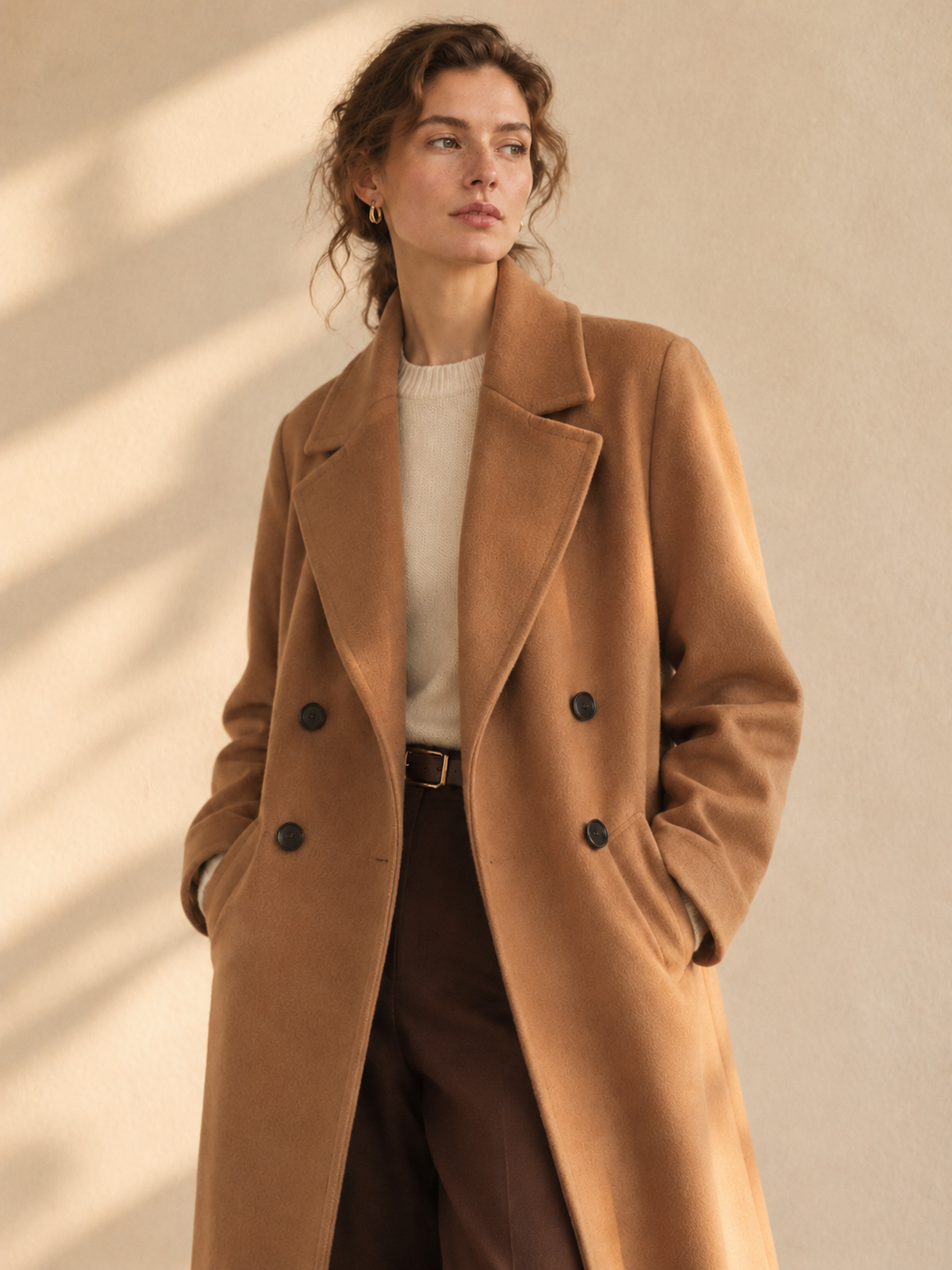
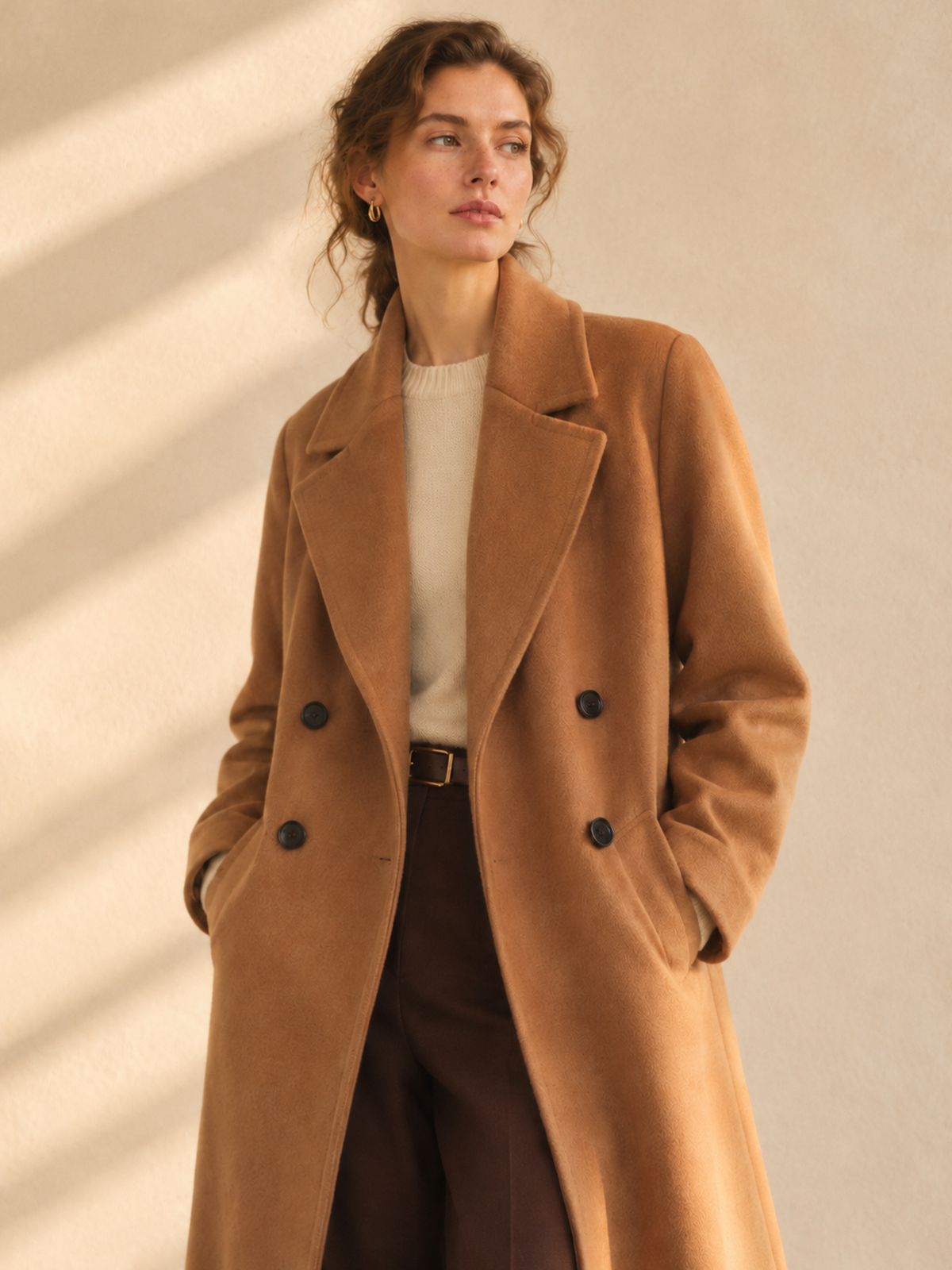
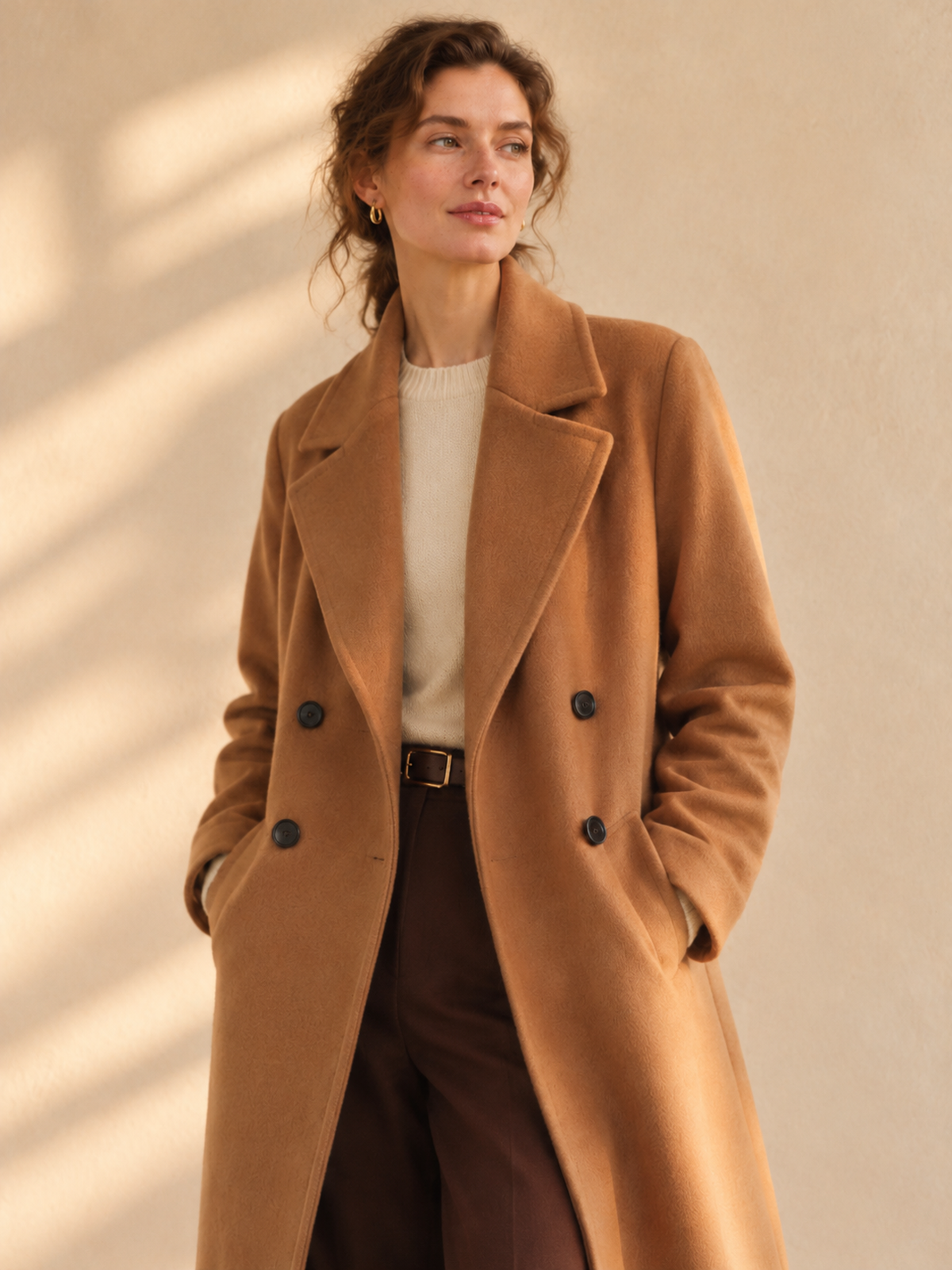
One block, three cloths
All three coats share a single fitting block refined over two winters.
Pressed wool, honest mill
Cloth bought from a mill we visit, in quantities we can honestly use.
Lined to last
Full linings finished with French seams — the coat-check test passed.