

Behind the Seams
A month inside the making room: the pattern that failed twice, the collar that took three attempts, and what the cloth taught us.
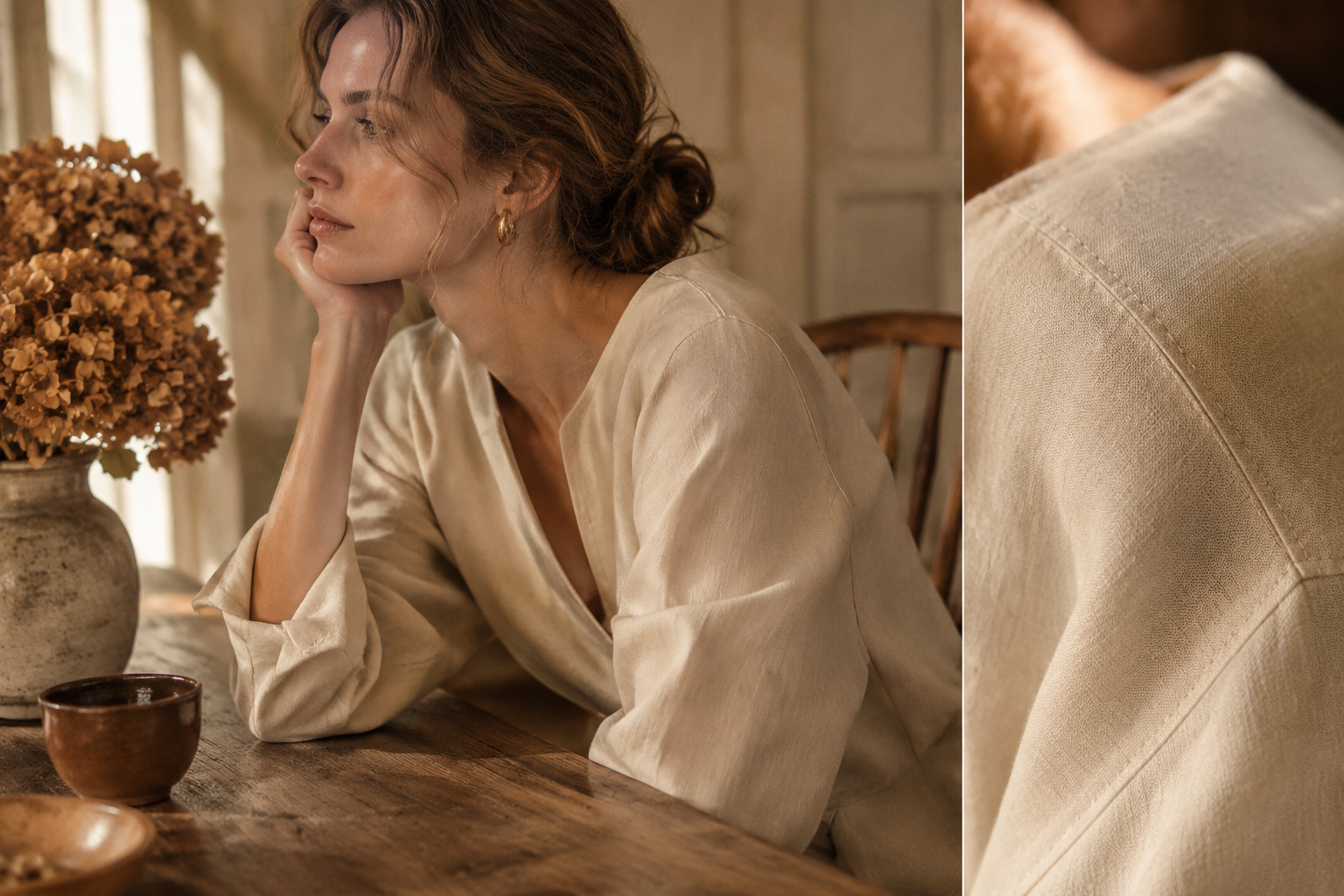
The making room is where this house actually happens, and it is far less photogenic than the lookbook would suggest. There is chalk on the floor, a dress form wearing a toile that lost the argument, and a wall of patterns annotated in two handwriting styles. We photograph it anyway, because rooms where corners could be cut are rooms worth watching. This is a month’s report, written the honest way: failures first.
The collar that took three patterns
The half-cardigan jumper went through three collars. The first sat like a neck brace; the second, corrected for height, rolled with a mind of its own; the third — narrowed at the back, weighted at the fold — finally sits the way a collar should, which is to say it stops being discussed. Three patterns for one collar is expensive. It is also the difference between a knit you wear and a knit you adjust all evening, and it is the kind of money we expect to spend.
The toile that lost the argument
The wide trouser began as a higher rise, because a trend sheet said higher rises were returning. The toile disagreed. On a real body, on a real staircase, the rise fought every sit. We cut it back within a centimetre of the house block and the argument ended. Trend sheets are welcome to their opinions; the staircase is the editor here.
The staircase is the editor. Trend sheets are welcome to their opinions.

What the cloth taught us
The undyed lambswool delivered its usual lesson: it cannot be hurried. Knitted under deadline pressure it blooms unevenly; given its week, it settles into the speckled warmth the season’s crew is known for. We now schedule the knit drops around the wool’s calendar, not the other way round — a small reversal that cost us a launch date and saved the knitwear.
Small wins, recorded
- The French-seam finish on the cream linen survived the wash test at forty degrees — a first for this cloth.
- The pocket bag on the camel coat was rebuilt in a lighter twill, saving forty grams without losing the hand.
- The pattern wall is now organised by body, not by season, which has already ended two arguments early.
Why we write this down
Because a brand that only shows finished garments is asking you to trust the seam without seeing the room. The five-year test applies to houses as much as to coats: we intend to be here, making this way, in five years — and the making room is where that intention is either kept or quietly abandoned. Watch this room. It is the truest page on the site.